“Did that Painting Just Move,” TheChiGuide.com
This spring at the international art fair, Art Chicago, one booth drew a particularly attentive crowd: Catherine Edelman Gallery was exhibiting three unusual works by artist Gregory Scott

This spring at the international art fair, Art Chicago, one booth drew a particularly attentive crowd: Catherine Edelman Gallery was exhibiting three unusual works by artist Gregory Scott
Assembling the leftovers of a hyper-consumerist world and reconstructing them into forms in no way reminiscent of their buy-and-sell origins rouses a fond serenity. In his solo exhibition Centered at Barbara Archer Gallery, Troy Dugas accomplishes this in perhaps the most fulfilling way possible. After all, what opposes consumerism, marketing, and labels more than mandalas and religiously tinged spreads that are all about rhythmic pattern and domestic tradition?
From a distance, they look like intricate, hand-woven lace or scrupulously handcrafted fabrics. The designs are at once dizzyingly complicated and reassuringly predictable.
CIGAR, BOURBON, BEER and various other consumer product labels are the primary medium for Troy Dugas” work. The artist recycles these often-discarded commercial signifiers, transforming them into elaborate tapestries comprised of intricate patterns, color and overall compositional play. Dugas says of his work, “At first glance my work is very serious, very organized. But when you investigate it, I think it”s kind of funny.

Lesley Dill’s “Poetic Visions: From Shimmer to Sister Gertrude Morgan” at the Whatcom Museum, Washington, October 23, 2011 – March 4, 2012.
In this new body of work, Atlanta-based artist Radcliffe Bailey plays dynamic movement around a still center. As a whole, these monumental canvases are full of activity–snatches of grid underlie sinuous lines and tangled marks that suggest diagrams, road maps, networks of synapses or meandering plant tendrils.
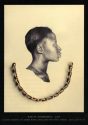
There are stories here, stories to be narrated by each of Whitfield Lovell’s spare renderings of humanity. It is the use of juxtaposition that one might notice first – that each piece is composed of a charcoal or crayon drawing on a slate of wood or cream paper, and an artifact, a found object from everyday life (a figurine, a bit of rope, a chain, a knife, a fabric bouquet). The composition is clean, as if portrait and artifact are located near each other without abrasion or overlap.