James Drake: Anatomy of Drawing and Space (Brain Trash) at MCASD
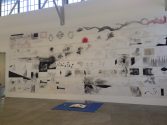
James Drake: Anatomy of Drawing and Space (Brain Trash) at the Museum of Contemporary Art San Diego – July 10 through September 21, 2014

James Drake: Anatomy of Drawing and Space (Brain Trash) at the Museum of Contemporary Art San Diego – July 10 through September 21, 2014

Throughout a century of oppression, photography served as a ray of light for black Americans, illuminating the humanity, beauty and achievements long hidden in the culture at large. By allowing a people to record and celebrate the affirmative aspects of their lives, the camera helped to countermand the toxic effects of stereotypes on their self-esteem.
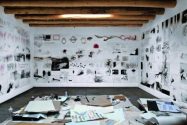
James Drake: Anatomy of Drawing and Space (Brain Trash) is the culmination of two years of active creation, reflecting imagery from throughout the artist’s forty-year career. In 2012, the artist committed himself to drawing every day.

DeDeaux is a conceptual artist who works in a wide array of media and is one of the first Louisiana artists to utilize electronic technology. “When we invited Dawn, we knew she had different components of different kinds of works,” said Brian Guidry, AcA curator. “Each show is different. Each show develops differently,” Guidry said. “The show previous to this was ‘Face Time.’ That show was composed of about 18 artists and Mary Beyt (curation assistant, AcA) and I worked together and that show came about much differently than Dawn’s.”
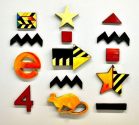
The love of wood was spontaneous for artist John Geldersma — he’s been working with it since he was 6. “I grew up in the suburbs of New Orleans. Every spring along the banks of the river wood was plenty available,” said Geldersma, 72, during a recent phone interview from his home in Santa Fe, N.M. “I could get as much wood as I needed.”
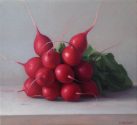
Weiskopf’s paintings elevate domestic life to something more exotic. Regional fruits and local delicacies like tropical longan berries, cold-weather quinces, and Italian Ossi dei Morti cookies become objects of beauty, worthy of being celebrated on canvas. The artist’s delicate renderings of the smallest details result in a body of work that invites careful viewing and rewards those who take the time to stop and pay attention.
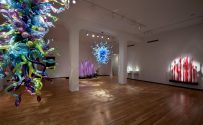
Over his nearly five-decade career as a visual artist, Dale Chihuly has become almost as well-known for being a successful and canny entrepreneur as for his colorful and intricately wrought glass creations.

David Halliday is a master of still photography. He is known for his captivating portraiture, his still-lifes of exquisite ripened fruit (some with sexual undertones), his ethereal landscapes and his anthropological renderings of ordinary objects. But within the serene stillness of his works lie movement and life.
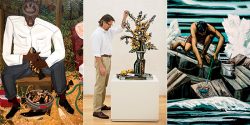
In 1982, when David Bates painted the monumental Ed Walker Cleaning Fish, he still made his living teaching art history at Southern Methodist University, where he’d gotten both his undergraduate degree and his MFA. The “little red house” in which he and his wife, the painter Jan Lee Bates, lived at the time, had walls so small he jokes that one could have made a nice easel for the 84-by-72-inch portrait. “I never really counted on making a living doing this,” Bates says, adding that it was the teaching salary that freed him up to make pictures of subjects that spoke to him. “That’s why I could paint an old black guy cleaning fish with a bucket of fish guts at his feet. Because I never thought anybody was going to buy something like that.”
When I was 14 years old growing up in Maine I experienced a startling awareness of understanding.