“DETAILS DIRECTORY: 48 Hours in New Orleans,” Details Magazine
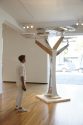
The Arthur Roger Gallery is pleased to be featured in “DETAILS DIRECTORY: 48 Hours in New Orleans,” by Connor Stanley via details.com.

The Arthur Roger Gallery is pleased to be featured in “DETAILS DIRECTORY: 48 Hours in New Orleans,” by Connor Stanley via details.com.
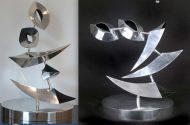
Since the early 1960s in New Orleans, Emery has been making large-scale aluminum sculptures that are constructed to work with the wind: They sway, rotate and bend. The shapes are positioned to give the sense they are dancing.
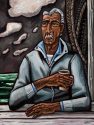
David Bates is a paradox. Based in Dallas, he appears focused on the mysteries associated with bodies of water. In an area not known for modesty, he keeps a very low profile. His paintings reflect an eclectic mingling of styles, but come off as boldly natural.
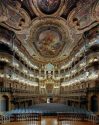
But there is a durable romance about these places, too, magnificently captured and celebrated in a spectacular new book by the American photographer David Leventi. He has produced gorgeous colour images of the spectrally empty auditoriums of 45 opera houses, almost all viewed from the same central vantage point on stage. It is as though we are being made to see what the prima donna surveys as she advances downstage and launches into her great aria.
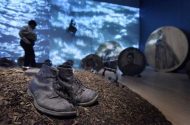
At the heart of “Whitfield Lovell: Deep River,” a new exhibit at the Cummer Museum of Art & Gardens, is the installation “Deep River.” At its center is a mound of dirt littered with objects — a pair of boots, a frying pan, a bugle, a pistol, a Bible, a tea kettle and an ax. The mound of dirt represents Camp Contraband, north of the Tennessee River near Chattanooga, where former slaves gathered after being liberated by Sherman’s March to the Sea during the Civil War.
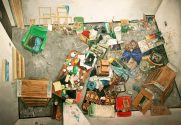
For Kobaslija, the studio is a unique and personal world built of interchangeable stuff: floors, walls, shelves, canvases, paint, paper, chairs, tables, brushes, easels, and lighting fixtures repeat themselves across the series, their positions made mysterious by the absent bodies of the artists working (and sometimes living) inside. The invisible movements and patterned routines of the artists order the placement of these unique assemblages, turning each picture into a leftover document of the “work” of the work of art.
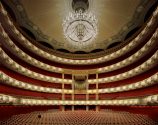
Photographer David Leventi’s new monograph, ‘Opera’ (Damiani) is the sum of many parts. “As the son of two architects, I experience an almost religious feeling walking into a grand space such as an opera house” writes Mr. Leventi, an architectural photographer who, over the course of eight years photographed the interiors of more than 40 opera houses around the world.
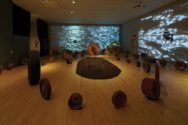
The Cummer Museum of Art & Gardens is thrilled to present the work of MacArthur Fellowship winner and internationally-recognized artist Whitfield Lovell. On display through September 13, Whitfield Lovell: Deep River is a multi-media installation that explores ideas of memory, identity, and freedom. Sculpture, video, drawing, sound, and music join together to create a unique experience that takes visitors on a symbolic journey in search of liberty.

Douglas Bourgeois’s transcendent, fantastical images of pop icons as religious icons, set against southern Louisiana scenery, are inspired by his rural life and his homages to what and who inspires him.
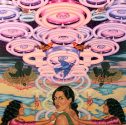
DOUGLAS BOURGEOIS’S ART feels disarmingly intimate. Beyond the rapt technique and startling syntax, what engages your notice ultimately is the circumscribed universe he creates – and further, the abiding spiritual tone of that universe. His paintings suggest some otherworldly realm – usually a lyricized south Louisiana – that exists only in reverie.