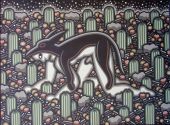
“John Alexander: Parallel Worlds” —Gerard Haggerty

For those who relish art the name John Alexander brings to mind buttery oil paint, signature whiplash brushstrokes, and canvases that represent nature as mysterious and never entirely benign. In this exhibition we see a less familiar side of the artist’s work: not the panoramic seascapes, overgrown gardens and teeming swamps he’s painted for more than 3 decades, but a drawn world of great refinement.
Read More

George Dureau: Talking to the Classico, The Barocco and the Rococo

The Arthur Roger Gallery is pleased to announce an exhibition of recent oil paintings by George Dureau. The new series of Dureau’s paintings includes a major painting “Mardi Gras ”01.” The paintings are again distinguished by the artist’s singular ability to render the beauty of the human figure in compositions inspired by allegorical scenes from great paintings and sculpture in western art.

Read More

W. Steve Rucker: Recall: A Drawing Installation

Exhibition Dates: Decemeber 2 – December 30, 2000 Gallery Location: 434 Julia Street, New Orleans, LA 70130 Hours: Monday–Saturday, 10 am–5 pm Contact Info: 504.522.1999; arthurrogergallery.com From December 2nd through… 

Read More

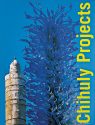
Chihuly: Chihuly Projects

From the resplendent towers in Chihuly in the Light of Jerusalem 2000 to the overhead sculpture made of more than two thousand handblown forms in the lobby of the Bellagio Resort in Las Vegas, the audacity and inventiveness of Dale Chihuly’s vision come across on every page of this 348-page volume. A splendid companion to Chihuly, which offers a general overview, this new book, with its focus on his most imposing creations and its essays by Barbara Rose and Dale M. Lanzone, will delight all art lovers, collectors, curators, and artists.

Read More

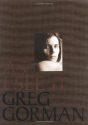
Greg Gorman: As I See It

Three years ago, photographer Greg Gorman created for powerHouse Books the most personal work of his career. This epic artist’s project features carefully selected young men—not big or overly built—who exemplify for Gorman a perfected state, allowing him to frame grace, beauty, and elegance in the form of the male nude. Included amongst the 212 portraits are many of Gorman’s friends and acquaintances, as well as professional models, many of whom had never posed nude before. The initial release of the book went on to become a best-seller.

Read More

“Ted Kincaid”, Art Forum

The permutations of color and image in Ted Kincaid’s photogravures raise, and politely refuse to answer, some heavy questions about modernist seriality and the identity of an individual artwork I’d be tempted to say that Kincaid’s works calculate a post-Warholian logic of pluralized identities and sameness beneath their surfaces, except that it’s nearly impossible to think that there is anything behind the ink on the paper: Like shadows, the gravures live only on the surface, which is appropriate given the light-based chemistry of the photo-intaglio process.

Read More

“Chihuly”, Arches Unbound

Much has been written about Dale Chihuly’s startling accomplishments as an artist—he is widely regarded as having single-handedly paved the way for glass to be accepted as a medium for serious art—but relatively few know about the 1963 Puget Sound alum’s Tacoma roots and his continuing commitment to his hometown.

Read More

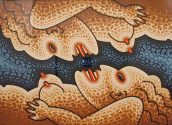
“Gordy’s Chimerical World,” New Orleans Art Review

Robert Gordy is a quintessential visionary. A dreamer. An undauntable dweller in that violet-skied, chimerical world of aesthetic fantasy. Rarely has there been much attention given to this facet of his art; it seemed so latent over the years. But his 1981 survey, assembling twenty years of his paintings and drawings into a remarkable cohesive whole, tacitly proclaims that it is the principle facet and cannot be overlooked any longer.

Read More

“What Art Books Don’t Tell You,” The Times-Picayune Lagniappe

By the time Robert Gordy died in 1986 at age 52, he had already created two of the most original and influential styles ever to emerge from New Orleans. During his later, briefer (five year) stylistic period, he produced a long series of psychologically intense, Expressionistic portraits that represented the AIDS epidemic. He created those riveting, distorted faces of men with a then-unusual printing technique known as monotype. Monotypes are one-of-a-kind renderings produced by swiftly painting designs directly onto a Formica printing plate, then placing paper over the plate and rolling it through a printing press as if it were an etching. Gordy pioneered the now-popular method locally.

Read More