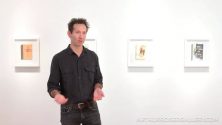
Ted Kincaid: Every Doubt That Holds You Here
Exhibition Dates: November 5 – December 24, 2011 Opening Reception: Saturday, November 5th from 6 – 8 pm Gallery Location: 434 Julia Street, New Orleans, LA 70130 Hours: Tuesday –…

Exhibition Dates: November 5 – December 24, 2011 Opening Reception: Saturday, November 5th from 6 – 8 pm Gallery Location: 434 Julia Street, New Orleans, LA 70130 Hours: Tuesday –…

“Using an insider’s bag of tricks and trade lingo, Waters celebrates the excess of the movie industry. Word and image play permeate Waters’ work, and the movie industry and its various sleights of hand are a common target. Always ambitious and playful, some of the works are condensed narratives or “little movies” as Waters calls them. Waters wickedly juxtaposes images from films and television that he captured by photographing his television set as they play.”
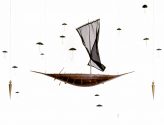
Last night’s Art for Art’s Sake block party was a pleasant blur. With the temperature in the sweet seventies and not a cloud in the autumn sky – really, not one – it was the perfect night for an art promenade. Read my AFAS preview here. Julia Street was crowded, but not as cramped as August’s White Linen Night. Lines at the outdoor bars were minimal and the food I sampled – macaroni and cheese studded with lobster – was outstanding. It would have been a great night out, even if the art had not been completely captivating.

Arthur Roger has been a mainstay of the Julia Street contemporary arts scene, and for years his gallery has been one of the must-see stops on first Saturday art openings. For years, Art for Art’s Sake has been the contemporary arts community’s signature event, though in recent years, White Linen Night has challenged that standing. On a quiet afternoon, Roger talks about changes in the New Orleans arts community and the business of art.
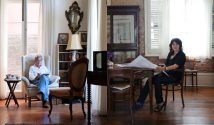
Ersy Schwartz, a sculptor, and Josephine Sacabo, a photographer, are old friends, neighbors and artistic collaborators who live in the crumbling village known as the French Quarter, in houses that are exemplars of a certain local aesthetic composed of equal parts grandeur and mystery, funk and rot. They are also fomenters of the sort of time-traveling artwork that comes with a distinctly New Orleans point of view.
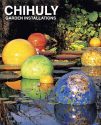
The greatest living artist in the medium of glass, Dale Chihuly has long been fascinated by the colors and forms of nature. Over the years, his work has become increasingly open, using forms that show a strong relationship to the architecture of natural shapes.
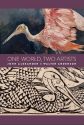
The work of southern artists is often infused with a deep sense of place and time. Whether inspired by the small town of the artist’s birth, the land, the waters-be it river, lake, or sea-the music, the people, or even the animals, that sense of place shows up in subtle, surprising, or literal ways, unique to each artist. One World, Two Artists shows how the Gulf Coast was a shared source of inspiration to two native artists: John Alexander and Walter Anderson.
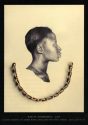
There are stories here, stories to be narrated by each of Whitfield Lovell’s spare renderings of humanity. It is the use of juxtaposition that one might notice first – that each piece is composed of a charcoal or crayon drawing on a slate of wood or cream paper, and an artifact, a found object from everyday life (a figurine, a bit of rope, a chain, a knife, a fabric bouquet). The composition is clean, as if portrait and artifact are located near each other without abrasion or overlap.