“Performance takes center stage at the McNay,” La Prensa

Artist Lesley Dill proves that powerful words can spark creativity for any medium in the exhibit “Performance as Art,” which opens at the McNay Museum on Wednesday.

Artist Lesley Dill proves that powerful words can spark creativity for any medium in the exhibit “Performance as Art,” which opens at the McNay Museum on Wednesday.
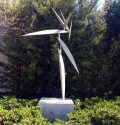
Tucked behind the State Library of Louisiana on Third Street is Anthem, among the fine works that comprise the Louisiana State Art Collection. Made in 1983, the polished aluminum sculpture is one the first outdoor installations by New Orleans-based artist Lin Emery. Internationally recognized for her kinetic sculptures, Emery is inspired by forms found in nature.

Gordon Parks courageous photography helped awaken America at the dawn of the civil rights era. He was a master of portraying people from every walk of life. But for years some of Parks’ most important early work seemed lost.
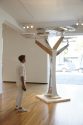
The Arthur Roger Gallery is pleased to be featured in “DETAILS DIRECTORY: 48 Hours in New Orleans,” by Connor Stanley via details.com.
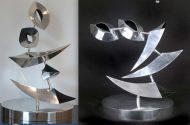
Since the early 1960s in New Orleans, Emery has been making large-scale aluminum sculptures that are constructed to work with the wind: They sway, rotate and bend. The shapes are positioned to give the sense they are dancing.
Three years ago, the artist James Drake (born 1946) began the ambitious project of creating 1,242 drawings that would trace and reference all of the developments of his multifaceted career. Known as both a sculptor and video artist, Drake has always considered draftsmanship to be a key to his process, and this body of drawings does not disappoint. It is both a fascinating tour of Drake’s creative thinking and a testament to the simple power of graphite and ink on paper in the hands of a master of the craft.
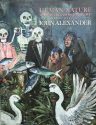
Viewers familiar with Alexander’s work will recognize some of the characters who have populated his swamps, oceans, jungles, and dinner parties over the years. In the paintings and drawings gathered for this exhibition, the artist had identified works that play off the themes that have sustained him throughout his career.
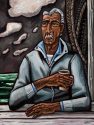
David Bates is a paradox. Based in Dallas, he appears focused on the mysteries associated with bodies of water. In an area not known for modesty, he keeps a very low profile. His paintings reflect an eclectic mingling of styles, but come off as boldly natural.
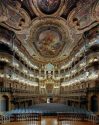
But there is a durable romance about these places, too, magnificently captured and celebrated in a spectacular new book by the American photographer David Leventi. He has produced gorgeous colour images of the spectrally empty auditoriums of 45 opera houses, almost all viewed from the same central vantage point on stage. It is as though we are being made to see what the prima donna surveys as she advances downstage and launches into her great aria.
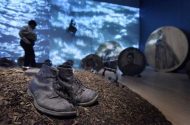
At the heart of “Whitfield Lovell: Deep River,” a new exhibit at the Cummer Museum of Art & Gardens, is the installation “Deep River.” At its center is a mound of dirt littered with objects — a pair of boots, a frying pan, a bugle, a pistol, a Bible, a tea kettle and an ax. The mound of dirt represents Camp Contraband, north of the Tennessee River near Chattanooga, where former slaves gathered after being liberated by Sherman’s March to the Sea during the Civil War.