Dougas Bourgeois: 89.9 WWNO Louisiana Artist Interview with Jacqueline Bishop – 2003
Jacqueline Bishop speaks with Douglas Bourgeois on 89.9 WWNO Louisiana Artist in January 2003.

Jacqueline Bishop speaks with Douglas Bourgeois on 89.9 WWNO Louisiana Artist in January 2003.
December 2002 Exhibition at Arthur Roger Gallery
Exhibition Dates: December 7 – 28, 2002 Opening Reception: Saturday, December 2 from 6 – 8 pm Gallery Location: 432 Julia Street, New Orleans, LA 70130 Hours: Monday – Saturday, 10am…
I first interviewed Jacqueline Bishop in October 1999. Nearly eleven years had passed since the murder of Chico Mendes, but the Brazilian rubber tapper and ecologist was still very much on her mind.
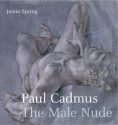
One of the most accomplished artists of the twentieth century, Paul Cadmus is best known for his provocative satires of American life. He first gained national recognition in 1934 when his bawdy painting The Fleet’s In! was barred from a Public Works of Art exhibition in Washington, D.C. For more than six decades following, Cadmus led a career as a meticulous craftsman devoted to Renaissance-era traditions of figurative realism. But his drawings of the male nude, which always formed the heart of his work, were often overlooked.
Exhibition Dates: November 2 –30, 2002 Opening Reception: Saturday, November 2 from 6–8 pm Gallery Location: 432 Julia Street, New Orleans, LA 70130 Hours: Monday – Saturday, 10am – 5pm Contact…
November 2002 Exhibition at Arthur Roger Gallery
In the fall of 2001, New Orleans artists Stephen Paul Day and Sibylle Peretti were approached about creating a site-specific installation for the fall of 2002, to be exhibited in the Contemporary Arts Center’s First Floor Galleries.
Radcliffe Bailey’s exhibition “The Magic City” opened and closed at Blaffer Gallery on the same evening in June 2001, a victim of flooding brought about by Tropical Storm Allison. As torrents of rain closed roads and highways, causing bayous throughout the city to overflow, Bailey—unfamiliar with Houston—became stranded, and spent the night in his car before retuning to safety. All of Bailey’s paintings and installations are an intricate blend of personal experiences and historical references, and for “Tides” he has created a cycle of highly expressionistic visual tableaux that survey watery metaphors from a variety of perspectives.
For about a decade from the mid-seventies, Al Souza called his art “photoworks.” An image comes to mind of a yellow roadside warning sign with a pictograph of a photographer working, warning the viewer to beware. Souza himself is wary of photographs and, since the mid 1970s, he has rejected—in his own wry way—the notion that photographs offer a seamless representation of reality.